Today's Concert Review is of My Bloody Valentine when they played the Austin Music Hall in Austin, Texas, on August 16, 2013.
My Bloody Valentine. left to right: Kevin Shields (guitar, vocals),Colm O Ciosoig (drums), Bilinda Butcher (guitar, vocals), and Debbie Googe (bass guitar). Image from their Last.fm artist page.
Allow me to admit openly that I do not listen to My Bloody Valentine nearly as much as I should. In general, I like the shoegaze genre, but I find I have to be in a particular mood to really get down to listening to songs that are part of the genre. I don't know why, but that's how it goes for me. So, walking into this show, I knew it'd be great, but I had no idea what I was in for.
To begin, the opener was a one-man band going by the name New Fumes (Daniel Huffman, as he is known to others when not on stage). I cannot seem to find much about New Fumes, but according to his artist page on his current label's site, Good Record Recordings, Huffman has been part of a few bands in the 90s and has done several collaborations with the Flaming Lips. Also a fellow blogger (kudos!), Huffman has posted some different covers he's done in recent time.
Musically, New Fumes is very experimental. As Huffman took to the stage, he thanked us for coming and said "And now I will begin with some noise." And well, that's exactly what it was. Armed with a laptop, some effects pedals, perhaps a small synthesizer of some sort (this is why I don't do keyboards...I have no idea about any of them, haha), he began by looping various sounds and adding and taking out layers of noises. Sometimes he would get on guitar, one of his preferred instruments, and play more layering effects there. What this style reminds me of, in a certain sense, is Daniel Ash's guitar style. No, I don't mean to say New Fumes sounds like Bauhaus. Not even close. But Daniel Ash is typically referred to as a texture guitarist, using the guitar to make sounds that go beyond just regular notes and chords, but instead adding a layer of intricacy to the music. That's essentially what the guitar parts for New Fumes sounded like to me, an added layer. There were some vocals, but true to shoegaze form, they weren't easily discernible and perhaps served more as yet another textured layer more than anything else.
New Fumes (AKA Daniel Huffman). Image taken by my friend, Laura Davila.
I believe New Fumes played four or five songs (they're each fairly long and Huffman didn't really break between songs, so it's hard to know for sure as I'm not familiar with his work). The audience seemed to really enjoy New Fumes as an opener (though one person did yell out "Freebird!" to which Huffman just smiled and laughed a little, so good on him for taking that in stride). Personally, it wasn't exactly my cup of tea. I could maybe get by with listening to it at my desk while working, but as a live act, it didn't get me pumped up or anything for My Bloody Valentine.
After New Fumes left the stage, it was time to get ready for My Bloody Valentine. The stage was cleared fairly quickly, but it took a while to make sure all the instruments were in tune (I didn't realize this at the time, but everyone used a good three or four instruments during the set!). Right before My Bloody Valentine took to the stage, the screen behind all the equipment lit up in a beautiful display with the letters "M B V" written out. It was time!
m b v. Image taken by my friend, Laura Davila.
My Bloody Valentine formed in 1983 in Dublin, Ireland. Things were rather slow for the group in the beginning. It wasn't until 1987 when their lineup would be solidified with Kevin Shields on guitars and vocals, Bilinda Butcher also on guitars and vocals, Debbie Googe on bass guitar, and Colm O Ciosoig on drums. Their debut mini album, This is Your Bloody Valentine, did not receive much acclaim and the follow-up EP, The New Record by My Bloody Valentine, was only met with small success (the EP did reach number 22 on the UK indie charts in 1986). After several relocation efforts, the group eventually settled in London. After recruiting Bilinda Butcher as co-vocalist for the group and having Kevin Shields take on the other half of vocals in addition to remaining guitarist for the group, Ecstasy was released. The album garnered moderate success, though it did receive its fair share of negative commentary with some reviewers feeling the album was half finished at best.
In 1988, My Bloody Valentine switched to Creation Records and released their first full-length album, Isn't Anything. The album was an immense success and put the group on the map. The album would go on to influence several shoegaze bands following the group. The sophomore album, however, would prove to not be an easy endeavor. Beginning in 1989, the group changed studios 19 times, hired several sound engineers, and did not come out until the end of 1991. While Loveless also gathered immense praise, it was a commercial flop. Given the extended recording period and conflicts between Creation and Shields, My Bloody Valentine was dropped from the label.
My Bloody Valentine, probably in the early 90s. Image from Paste Magazine.
In 1992, My Bloody Valentine signed to Island Records. However, Shields began suffering a bout of writer's block. For the next five years, the band would remain largely inactive, releasing only a couple cover songs. Eventually, each of the four members left the band to either pursue other interests or disappear from the public eye. My Bloody Valentine was over by 1997.
In 2007, rumors circulated that My Bloody Valentine were reuniting and would play Coachella. This wasn't the first time the band were rumored to reunite, however. Similar rumors surfaced in 2003 and turned out to be false. However, Shields did confirm these latest set of rumors. Ten years later and nearly fifteen years since they last played a live show, My Bloody Valentine were back. Additionally, the third studio album that they had been working on when they signed to Island Records was reportedly almost finished. The third album, m b v, would not be released until early 2013, but was again met with universal acclaim. Since then, the band has been on tour across the world supporting their newest effort.
My Bloody Valentine are often considered the pioneers of shoegaze. On stage, the group were known for mostly standing stock still and even literally gazing at their shoes. The music of shoegaze acts often relies heavily on various distortions and effects (requiring you to look down so you hit the right pedal anyways). The music genre also includes vocals that blend into the music and aren't particularly discernible on their own, adding to the atmosphere of the music, but making it near impossible to determine what the actual words are that are being sung.
Bilinda Butcher and Debbie Googe. This is how you shoegaze! Image taken by my friend, Laura Davila.
The night opened with "I Only Said" and continued on through most of the album Loveless, a few tracks off of m b v, and songs off the previous EPs and first album. One thing to be said about My Bloody Valentine is that they are LOUD. The beat of the drums becomes your heartbeat and the guitars course through your mind, mingling with your thoughts in an intimate harmony that is fairly unique in a live concert. After a while, much of the songs begin to sound similar (one trick that shoegaze can commonly be plagued with, unfortunately). However, the group maintained a constant energy (even if it's to mainly stand still). Debbie Googe was about the only person to move around some as she absolutely killed it on bass guitar (to which I now really want to learn bass guitar). The group ended the night with their traditional closer "You Made me Realise" which has a portion many fans call "The Holocaust" in which the band play the same note at deafening sound from anywhere between a couple minutes to thirty minutes. Reportedly, we got this audio assault for eight minutes, which even with ear plugs left me with my hearing to my right ear shot for a couple days.
On the whole, it was neat seeing My Bloody Valentine live, and certainly a rare treat that may not happen again. However, much as it's difficult to dance to shoegaze, I find it a bit tough to really enjoy it live as well. This isn't to say My Bloody Valentine were terrible or anything. They certainly weren't. But, I like concerts with more energy, songs I can sing to, and a little variety. It just wasn't personally my kind of show. The audience around me were definitely into the show and you could see the awe on their faces at getting the chance to see these guys. It was a great night, to be sure, just not one I'll be repeating any time soon if for nothing else than the fact that I need better ear plugs before going again.
Setlist: (I didn't even get the chance to take a picture of one, sorry!)
I Only Said
When You Sleep
New You
You Never Should
Honey Power
Cigarette in Your Bed
Only Tomorrow
Come in Alone
Only Shallow
Thorn
Nothing Much to Lose
Who Sees You
To Here Knows When
Wonder 2
Soon
Feed Me With Your Kiss
You Made Me Realise
Ratings:
New Fumes - 3.5 out of 5 (not really my kind of music and the material got to be a bit repetitive early on)
My Bloody Valentine - 4 out 5 (about halfway through the set, it did seem like everyone in the crowd checked out for a bit as there was little variety to the set)
Today's Music Review will cheat a tiny bit and be of not one, but two, offerings from the short-lived collaboration of Peter Murphy and Mick Karn - Dalis Car.
Dalis Car in 1984 - Peter Murphy (vocals) on the left and Mick Karn (bass guitar, saxophone, synth, flute) on the right
1982 was a tumultuous year for both members of Dalis Car. For Peter Murphy, it was the sign of the end of Bauhaus coming. October saw the release of The Sky's Gone Out, a decidedly dark offering from the British rockers that was met with mixed reviews leaning more to the negative side of the scale than positive. Among the four members, there was growing tension about the direction in which to take the band. As tensions mounted, the group toured in early 1983 before settling down to record their fourth studio album. It was during this time that Peter Murphy fell ill with pneumonia, spending time in the hospital and unable to record. The remaining members of Bauhaus decided to go forward without Murphy, writing and recording most of the album before he was well enough to come to the recording sessions. This, combined with unease over Murphy being given more of a spotlight by the press (with a semi solo appearance in the opening scenes of The Hunger and appearances in a string of Maxell ads not helping matters any) resulted in the band disbanding shortly after recording for Burning From the Inside had been finished.
Bauhaus in 1982 before the group split. Left to right - Peter Murphy (vocals), David J (bass guitar), Daniel Ash (guitar, saxophone), Kevin Haskins (drums). Image from Ondarock's website
Similarly, Japan's rise to fame was also becoming characterized by immense personality clashes among the members of the group and eventually deep personal clashes (notably between Mick Karn and David Sylvian). 1982 marked the release of Tin Drum which would be the final Japan album. The album resulted in one of the group's most popular songs, "Ghosts," which reached number 5 on the UK pop charts. The group went on a farewell tour following Tin Drum's release. Most of the members of Japan went on to other projects and solo careers of their own.
Japan. Right to left - Mick Karn (bass guitar), Steve Jansen (drums), David Sylvian (guitar, vocals), Rob Dean (guitar), and Richard Barbieri (keyboards). Image from Japan's Last.fm artist page.
How Peter Murphy and Mick Karn met is a bit of a legend and depends on whose story you wish to follow. Musically, Japan and Bauhaus are not very similar (yes, both rose from the ashes of the punk movement, but Japan was more in the New Wave/New Romantic vein while Bauhaus remained more in the post-punk and media-dubbed "Goth Rock" arena). Per Karn's version, his agent had heard of Bauhaus splitting and saw Peter Murphy as the yang to Karn's yin. Where Karn was not known for being a lyricist and vocalist, Murphy was not know as a musician in the purest sense. His agent suggested the two work together, Karn agreed they try it out, and the two parties came in contact. Per Murphy's version, he was conducting a post-Bauhaus interview and was asked who he'd collaborate with if he could work with anyone. Not thinking anything of it, he said Karn's name as he was drawn to Karn's musical genius. Days later, Murphy came home to a message on his answering machine - from Karn himself proposing they start a new project together!
Perhaps even more mythical is how the duo came to call the new project 'Dalis Car'. One prevailing theory that has been denied by Murphy and Karn attributes the name to a Captain Beefheart song (the song being titled "Dali's Car" from his 1969 album Trout Mask Replica). Another theory centers around an art exhibit in the late 1930s that featured a piece by surrealist painter Salvador Dali (dubbed 'Dali's car'). The final prevailing theory revolves around a dream Murphy had one night of being offered to buy a car from Salvador Dali that would grant a "mystical" experience. Regardless of the true series of events, Karn and Murphy agreed to begin a new project in 1984 and opted to name it Dalis Car.
Things were difficult for the two from the get go. Both preferred to work alone on the songs, sending tapes back and forth through the mail as opposed to working together in the studio. This eventually resulted in their first release, 1984's The Waking Hour (with "The Judgement is the Mirror" released as the only single from the album) before the two split to each embark on their own solo careers. Part of what prompted the split stemmed from the difficult writing conditions and how each wanted to dominate the project (since both had seen success in their respective pre-Dalis Car endeavors). Additionally, reviews of the debut album were far from flattering, pointing out that the album was a literal mashup of the duo's strengths with nothing additional from outside the box. While Dalis Car was not nearly as popular and successful as one would think, it did result in something rather positive for Peter Murphy.
Most of the music and lyrics of Bauhaus were not written by Peter Murphy at all. It wasn't until The Sky's Gone Out that Peter Murphy wrote and composed a few songs on his own (particularly "All We Ever Wanted Was Everything" where he wrote the music surrounding some of the first guitar chords he learned to play while Daniel Ash supplemented the lyrics and "The Three Shadows, Pt. II" where Murphy composed all the music). Post-Bauhaus, there was some doubt as to whether Murphy could pull off a solo career. Did he have the experience? Did he have the musicality? Many skeptics thought not. With Dalis Car, Murphy had more free range in writing the music and the lyrics, proving that he could do this on his own. With Dalis Car dissolved in 1985, Peter Murphy went on to start his solo career, releasing his first album in 1986 (Should the World Fail to Fall Apart). His writing style would initially require a muse through which to convey his thoughts and turn them into actual notes, but the unique method would pay off handsomely with a very loyal fan base and near mainstream success with his third album, Deep.
Still going strong, Peter Murphy. From the May 7, 2013 show on the Mr. Moonlight Tour at Webster Hall in New York City. Photo from The Bowery Presents website.
Over the years since Dalis Car first met, Peter Murphy went on to release eight studio albums and even tried to reunite Bauhaus twice, first in 1998 on the Resurrection Tour (which was to hopefully result in a new studio album, but those plans were cut short as the group quickly disbanded again after the tour) and again in 2005/2006 to tour mostly as openers for Nine Inch Nails (2008 did see the fifth and final Bauhaus album, Go Away White, released, but no touring would take place to support the album as the album itself was barely finished due to more struggles among the members of the group). Mick Karn, on the other hand, went on to release numerous solo albums, collaborated with several musicians, and write a book about his life up to 2006, intending to write another book about his life in time.
By this point, Dalis Car was as dead as Bela Lugosi. No one had really given the short-lived project any thought. 2010 came rolling around, 26 years after Dalis Car had formed and disbanded. In June, Mick Karn announced on his website that he had been diagnosed with terminal cancer (the type was never revealed). His family was struggling financially with the medical costs and they sought help from his fans. Many helped and several tribute concerts were staged to help raise money for the ailing Karn. For fans, this was the worst news they could ever receive. Mick Karn, talented musician, integral part of Japan, master of his own solo work, was dying at the young age of 51.
A more recent picture of Mick Karn. Photo from thegoldenyear.wordpress.com
Unexpectedly, in August of that same year, Peter Murphy posted a video to his Facebook account (which was quickly removed/hidden) where he disclosed to fans that he was teaming up with Karn again to revive Dalis Car one more time and that the two would begin working as early as September. It was the first time the two would see each other since 1985 (link).
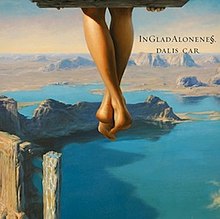
While the two planned to record a full length album, Karn's health fell dramatically and quickly. Karn lost his battle to cancer on January 4, 2011, at the age of 52. Only five tracks were finished, released in April 2012 as the EP InGladAloneness. The original Japanese release included a book with photos taken by Steve Jansen (Japan's drummer and who remained friends and collaborators with Karn over the years) and comments from artists who had worked with Karn on his legacy and life. On July 24, 2013, what would have been Mick Karn's 55th birthday, InGladAloneness was made available for purchase again with 100 copies signed specially by Peter Murphy with all proceeds going to the Mick Karn Appeal Charity to help his family.
Cover to 1984's The Waking Hour
The Waking Hour is incredibly characteristic of both Murphy and Karn. The bass licks Karn recorded are unmistakable signatures of his style. Vocally, Murphy sounds much as he did while in Bauhaus, complete with beautiful, cryptic lyrics. Different for Murphy, however, is the style of the music, featuring a slew of other instruments aside from the drums and bass guitar that were heavy players in Bauhaus's music with guitars used mainly to add texture to songs. Also lacking on the album were the screams and shouts Murphy tended to cast in later Bauhaus recordings. On a certain level, Dalis Car was what one might expect - a sum of its parts.
The second track, "His Box," features a Middle East-influenced synth part that makes this track stand out. A gorgeous track, Murphy does wonders in creating the harmonies on vocals. The bass guitar is characteristic of Karn, yet inviting. Flutes and guitars add rich flourishes to this song. Personally, I think this one would have made a fine single as well had the album been viewed a bit more favorably and if Karn and Murphy would have continued further on this project.
"The Judgement is the Mirror" is the only single from the album, characterized with dominating synth and bass guitar to Murphy's smooth vocals. Drums don't feature very prominently on this track. This one serves as a beautiful ending to the album. The music video features both Karn and Murphy dressed in full suits passing off a laserdisc in a manner that nods back to them being the yin to the other's yang.
Other stand out tracks include the synth dominated "Cornwall Stone," the self-titled "Dalis Car," and absolutely stunning musical "Artemis" (which receives a "face lift" on InGladAloneness with some updated instrumentation and lyrics). In all, there honestly isn't a bad track on this album and while it may have elements highly characteristic of both musicians, I don't see why that should be considered a bad thing.
Cover to 2012's InGladAloneness EP
InGladAloneness can be described very succinctly - it is chilling. On the one hand, it amazes me how nothing seems to have changed in the 26 years between this EP and The Waking Hour. Playing the two back to back, you cannot tell that kind of time elapsed. Murphy is vocally spot on and Karn's style is just as glorious as ever, perhaps made slightly better with the passing of time. The composition of each song is true to form with The Waking Hour and the lyrics just as beautiful. The EP brings in a bit more Middle East influence, particularly with the track "Subhanallah" (which, oddly enough, is not a Dalis Car track originally).
There is something absolutely divine to this EP. It feels as if Karn knew this would be his last work. There is so much soul and emotion with every song. "Subhanallah" (translating to "God is Great" from Arabic) is a bit haunting to me. It is a dua (invocation/supplication that is part of Islamic prayer where a Muslim aims to connect with God and ask for forgiveness and favors) that is written in Turkish. While this song was not done originally by Dalis Car (Murphy recorded this somewhere around the turn of the century as it was included on the small issue of VHS tapes of The Grid), it may have been included as a parting prayer of sorts from Murphy to Karn.
The EP ends with "If You Go Away," a peaceful and soft song marked with a backing orchestra arrangement and acoustic guitar to Peter Murphy's soothing vocals. The track is a cover of the popular Jacques Brel song "Ne me quitte pas", which is said to have been one of Karn's absolute favorite songs. The song is a powerful closer to the EP in its softness, presenting a rather emotional end that stands in contrast to the other four tracks on the EP. It is a touching and emotional farewell.
Overall, I hold that this is easily the most underrated and underappreciated of all the post-Bauhaus projects. It holds a surreal uniqueness that is still true to form for both Karn and Murphy. Even more astonishing is how the two could pick up where they left things 26 years later and record a last effort on Karn's part that is beautiful, chilling, and lasting. My only qualm with this project is that there simply isn't more. Rest in peace, Mick.
Today marks a special Music Review (and needed a somewhat witty title that tells you nothing unless you already know). I bring you a fairly rare treat - a review of the 7" collaboration between Rene Halkett and David J, "Nothing"/"Armour."
Album art to "Nothing"/"Armour" featuring original artwork by Rene Halkett himself.
I've titled this post "Bauhaus Meets Bauhaus" because, well...that's what this literally is. Rene Halkett was, from 1923 to 1925, a student of the original Bauhaus school in Weimar, Germany (the original school was open from 1919 to 1925 before moving to Dessau from 1925 to 1932, and then finally moving to Berlin from 1932 to 1933 before closing for good due to pressure from the Nazi regime). The Bauhaus art form is heavily marked by lack of ornamentation and focuses on meshing function of the object or building to its design. The art form also incorporates modernism, leading to rather simple designs, the favored ability of mass production and industrialization, and an overall clean look. While at the famous art school, Halkett worked on his painting and writing talents. After leaving the school in 1925, he became a bit of a newspaper journalist writing for a local liberal print. Once the Nazis took power in Germany, Halkett left the country for England where he became involved at a children's theater as a painter. Halkett would later serve as a translator during the Nuremberg Trails and eventually found himself working the German section for the BBC.
As many of you perhaps know from my prior postings, David J was the legendary bass guitarist for British post-punk group, Bauhaus (originally named Bauhaus 1919, and going so far as to even use the same typeface logo as the art school once had). Since those days, he has gone on to be part of another legendary post-punk act (now more or less defunct), Love and Rockets, and has maintained a fairly constant slew of solo recordings over the years with some touring here and there, recently with opening and backing band Adrian H and the Wounds. He has also been part of several collaborations including (but surely not limited to) appearing on some releases by Porno For Pyros, having done the bass work on Voltaire's 2011 album (Riding a Black Unicorn Down the Side of an Erupting Volcano While Drinking from a Chalice Filled with the Laughter of Small Children), and contributing bass to a track for Amanda Palmer and the Grand Theft Orchestra. As of this writing, David J has released eight solo albums, contributed (maybe even did all the work? I'm not sure) for four film scores, and five EPs on his own.
The indelible Mr. David J. Image from the LA Stage Times.
So, Bauhaus meets Bauhaus, indeed!
I don't know much of the story about how this little project came to be. What little I've unearthed suggests that somehow David J knew of Rene Halkett and where he lived (the back of the 7" sleeve lists Halkett as having been a lecturer and BBC-broadcaster, among other things, so maybe David J saw him on TV or attended a lecture of Halkett's when attending art school?). In 1980, David J (still very much part of Bauhaus the band, which dissolved for the first time in 1983) drove to Halkett's cottage with a tape recorder and the intention of recording Halkett reciting some of his poetry. Later on, David J added music to the background of these recitations and the initial product released was this 7" in 1981. Years later, the two tracks on the 7", an additional track that was much longer, and the original recordings of Halkett speaking only were released as a very limited press CD (about 1000 copies total). The collaboration was rather fortuitous in timing as Halkett passed away in 1983, only a couple years after the two met and recorded the initial recitations. Purportedly, David J inherited a lute from Halkett and used it to make some of the backing music.
For the purpose of this review, I will look at only the two original tracks on the 7".
"Armour" opens with just Rene Halkett reciting his poetry before (and rather abruptly) piano, drums, and bass enter the fray. Everything musically is fairly signature of David J (keep in mind that Bauhaus musically was typically very drum and bass heavy which is relatively unique and rather refreshing at times, and David J clearly brought that mindset forth to this collaboration). The recitation itself is absolutely sublime. Rene Halkett's voice is strong even in his old age and his accent adds a dark touch to the poem. The recording has a slight echo to it, as if recorded in an empty room. The poetry itself is beautiful and a dark delight to behold.
"Nothing" opens with Halkett and some background music (which at the very very beginning sounds like a small portion of the music from "Hollow Hills" was used? The part towards the end before the lyrics basically repeat "So sad...hollow hills...so sad..."). This track is perhaps even more chilling than "Armour." As before, Halkett's voice is clear and David J does a superb job of meshing the music to the poetry (as an example, at one point early in the track, Halkett recites "As if I could remember it, I'd tell - there was that light" and immediately after he says "light" a loud crash sounds).
Ultimately, this is a truly unique and dark collaboration between Halkett and J. How it came to be, I am unsure, but I'm so very glad it did. Rene Halkett shows his skill as a poet and the manner in which he recites his work is chilling. David J does a grand job providing the background music to enhance the recitations and add another level of feeling and emotion to the poems. The only tragedy in this piece of work is that it was only (originally) the two poems (and even with the addition of the third poem on the limited edition CD, it still isn't enough). This is a rare treat everyone needs to listen to.
Today's Music Review is of the latest effort from the legendary group Iggy and the Stooges (or sometimes referred to simply as "The Stooges"). This is 2013's Ready to Die.
Album cover to 2013's Ready to Die
It's hard to imagine what the world would have been like had Iggy Pop never formed The Stooges or took on his own solo career. So much of his work in both arenas has helped form what we consider punk rock music today and Iggy Pop himself has come to embody the modern age rock star. While Pop, now a sprightly 66, is beginning to show the signs of his age, this latest offering from The Stooges sounds better than ever and brings an energy about it as refreshing as the first Stooges album (1969's self-titled The Stooges).
Initially, Pop's work (both with The Stooges and solo) was largely overlooked and, in retrospect, viewed as being incredibly ahead of his time. Only within the last few years has Pop's work transcended relative obscurity and become much more widely enjoyed by the general audience. Songs like "I Wanna Be Your Dog" have become staples in several movies and video games and Pop's solo hit "Lust For Life" was for a long time featured in, of all places, commercials for the water park Seaworld.
Originally, The Stooges were together from 1967 through early 1974. The band encountered several struggles in the short time span, ranging from difficulties in finding commercial success to Pop's own struggles with drug addiction at the time. The group did release three albums before their split and Iggy Pop chanced to meet David Bowie during the Ziggy Stardust era, leading to a close friendship and Bowie's major involvement early on in Pop's solo ventures, writing parts of and producing albums like 1977's The Idiot.
2003 saw Pop reunite with original members of The Stooges to perform shows for the first time since 1974. By 2007, the group released their first new album since 1973's Raw Power, entitled The Weirdness. Tragically, the new album garnered mostly negative reviews with critics feeling the 2007 album was a sad, desperate attempt to recapture the energy and magic that comprised the first three Stooges albums and that the group needed to simply accept that their time as a cult band was over and to find a new day job. Things wouldn't quickly improve for the group, either. After extensive touring from 2003 through 2008, early 2009 brought the terrible news of Ron Asheton's death (Ron was the original guitarist for The Stooges, a close friend to the members, and in their words, irreplaceable).
The group did continue to tour, starting up again in late 2009 with James Williamson on guitar (James became the second guitarist for the group around late 1970 and returned after Asheton's death). Following some gigs in 2010 and finally being inducted into the Rock and Roll Hall of Fame (The Stooges had been nominated seven times prior, all unsuccessfully), The Stooges mostly became silent once more. Until this year.
Iggy Pop, now 66, still rocking it out like he was 20. It's just now that he's finally showing a few signs of his age. But only a few. Photo from geeksofdoom.com
April 2013 marked the release of the fifth Stooges album, Ready to Die. Generally, other reviews have been fairly positive with only a handful calling this album yet another poor attempt to be like the first three Stooges albums. There is some criticism of the lyrics being collections of schoolboy-ish innuendos, at best, though I've felt that even the original Stooges albums had a bit of that going on - it's just their style.
The album opens with the first single, "Burn," an upbeat rock number (video posted below that someone took when they played here at SXSW...which I tragically missed). What stands out to me most on this track are the clever turns James Williamson throws in on guitar, adding a special feel to the song. This one immediately draws the listener in and is a great way to open the album.
"Sex and Money" has a feel that reminds me of the older Stooges sound (even if the song is basically about paying for sex and wanting to party all the time). Other notable songs on the album include "Gun," "Ready to Die," and "Dirty Deal," all of which have the punk-rock sound The Stooges are well known for. Of particular interest are also the songs "Unfriendly World," "The Departed," and "Beat That Guy," each losing the more traditional punk sound, adopting acoustic guitars, and taking a more contemplative tone in the lyrics and presentation.
This newest offering is certainly a strong one, even if it doesn't quite meet the same quality as the first three Stooges albums. It isn't Raw Power, but it isn't an album you should simply pass up because of that. For the most part, the album remains true to The Stooge's typical punk rock sounds and suggestive lyrics, though "Unfriendly World," "The Departed," and "Beat That Guy" do throw you for a bit of a loop. After all these years, Iggy Pop might finally be showing some wrinkles, but for 66 years of age, he can still belt out those lyrics. James Williamson, while no Ron Asheton, adds some tremendous work on guitars. Give this album a whirl and if you can, see these guys live. You won't be disappointed.
Today's Concert Review is of Adam Ant (and The Good, The Mad, and The Lovely Posse) when he played The Belmont here in Austin on 7/26/13.
Adam Ant. Image from Brooklyn Vegan
I've been an Adam Ant fan for a few years now and was fortunate enough to see him on tour the last time around (I forget when exactly, but sometime late 2012) when he played at Emo's East. I was really impressed by that show and loved how he played most of the hit songs everyone loves but also threw in some rarer goodies and some tracks from the new album. I was also impressed with his band and the fact he used TWO drum sets.
Upon arriving at The Belmont, I ran into a friend (who I met the last time I was at The Belmont in April seeing Peter Murphy for the fifth time). We got some decent spots towards the front, left side of the stage and chatted for a bit until the openers came on.
Prima Donna were the openers for the night. Prima Donna are a band out of Los Angeles that formed in 2003. Unlike traditional rock bands of today, the group prominently features keyboards and saxophone on most of their songs in addition to the more traditional guitars, bass guitars, and drums. The group clearly draws influence from the likes of David Bowie, Marc Bolan, and to a certain extent, even Mr. Adam Ant himself.
Prima Donna. Also featuring the amazing death hawk of a person in front of me. Picture taken by me
They played a modest set including a few songs off their 2012 album Bless This Mess (notably, "Sociopath" and a tribute to Adam Ant, "Maxine"). Throughout the set, the group maintained an incredibly high level of energy with singer Kevin Preston constantly darting from one side of the stage to the next, leaning over the crowd and getting in people's faces, and dropping to his knees only to fly back up. Overall, the group sounded great and did a nice job of getting us pumped up for Adam Ant.
Adam Ant began as the singer of post-punk act Adam and the Ants before going solo in 1982. Over the years, Adam Ant has spurned several hit singles from his albums (both as Adam and the Ants and solo), remaining a constant force to be reckoned with. While focusing on music from a young age, things haven't always been perfect for Adam Ant. At the age of 21, the singer was diagnosed with bipolar disorder and has had many problems over the years handling the effects of medications used to treat the illness. While not perfect, he appears to have things under control nowadays and has always been courteous to his audience (in my experience).
A younger Adam Ant from the "Stand and Deliver" music video. Picture from jango.com
Once it was time for Adam Ant to perform, the lights completely cut out and a screen at the back of the stage was lit up with "Adam Ant and the Good, the Mad, and the Lovely Posse" and the new logo for the Blue Black Hussar himself. Tchaikovsky's "1812 Overture" blared over the speakers and we began to clap in rhythm to that music. The band members began to take to the stage to our loud cheers. Then we roared to life as Adam Ant took to the stage, wearing his traditional pirate-esque regalia and an attitude that said "It's time to go crazy." The group started into a song off the new album (2013's Adam Ant is the Blue Black Hussar Marrying the Gunner's Daughter), "Marrying the Gunner's Daughter."
As before, Adam Ant maintained an immense energy throughout the entire set (even in the Texas heat!). Taking pictures of him was difficult as he darted from one side of the stage to the next without ever seeming to pause. The band sounded marvelous just like the previous time I had seen them, matching energies with Adam Ant.
The band roared through many classic Ant favorites, including "Beat My Guest," "Goody Two Shoes," "Stand and Deliver," and my personal favorite (though I don't care for the live version as much because it desperately...haha, pun...needs that trumpet part) "Desperate But Not Serious." The group came back out for a three song encore amid our shouts for more Antmusic (which I've linked a video of below, from the first time I saw him here in Austin over at Emo's East).
Ultimately, this was another fine performance from the Blue Black Hussar. He continues to sound flawless after all the years and his stage energy is certainly a force to be reckoned with. While it would have been nice to get a handshake or two, he still talked to the audience every now and then and was kind enough to give a couple fans the bandanna he was wearing on his pants for a time and one of his pirate gloves, a nice gesture on his part that won't be quickly forgot. The set was a wonderful mix of classic Adam Ant songs with only a few off the newest album. Overall, the crowd was very into the show and singing along at the top of their lungs and screaming adoration for Adam Ant. He is most assuredly not a performer to be missed, so be sure to check him out when the tour comes near you!
Best shot I could get of the set list on stage. They didn't have many to hand out and stage crew were too busy to quickly hold down the corner for me to get a better picture.
After I believe three previous efforts to see these guys, I finally bring you a Concert Review for The Psychedelic Furs! The show took place 7/18/13 at Antone's here in Austin, Texas.
The Psychedelic Furs. Left to right: Mars Williams (clarinet and saxophone), Richard Butler (vocals), and Tim Butler (bass guitar). Photo taken by me.
I've tried for the last four years, I believe, to see the Psychedelic Furs. I've bought tickets about three or four times, but inevitably I'd end up having an exam get scheduled or a major presentation or project the day after the show, ultimately thwarting my chance to see these guys live. Last night, the stars finally seemed to align just right and I was able to go to the sold out show here in Austin!
This was my first time at Antone's, either the old venue which is now Infest or the new one. The venue was smaller than I expected (I figured Antone's would upgrade in size much like their neighbor, Emo's, did compared to their original downtown location), but I much prefer smaller intimate shows, so this wasn't a problem. I got to the venue a little before doors officially opened, but they were letting people in early, so I went in and managed to get near well to front and center.
The Technicolors were the sole openers for the night. I think I've heard of them before, but didn't know their music or much of anything about them. The Technicolors are a five piece indie rock group hailing from Phoenix, Arizona, that formed a few years ago. They are currently signed to Tallest Man Records and have released only one album so far entitled Listener.
The Technicolors. Photo taken by me.
Their set consisted of seven songs including a brilliant cover of a song I know I've heard before but don't know the name of and cannot find to save my life (I know, very descriptive, but it wasn't on their set list, so I have no idea what it is).
On the whole, The Technicolors played with great enthusiasm, energy, and smiles all around. The person on electric piano was head banging the entire time and possibly the most energetic of the group (which is saying a lot as everyone was killing it, to be honest). The sound seemed a bit off like certain parts weren't balanced right (I had a hard time hearing the guitar parts their singer would play). I'll be listening to these guys on Spotify as I think they're a band I could get into over time.
Setlist for The Technicolors
After The Technicolors finished, it was time for the Furs! The Psychedelic Furs were one of the many post-punk/New Wave bands to emerge from the shambles of the punk scene in 1977 in England. The group is led by brothers Richard Butler (vocals) and Tim Butler (bass guitar). The current line up also includes Paul Garisto (drums), Mars Williams (clarinet and saxophone), Rich Good (guitar), and Amanda Kramer (keyboards). The band has released seven albums, the last being in 1991 before going on hiatus for a few years. Currently, the Furs tour rather extensively, performing many of their famous hit songs and even some lesser known favorites.
As we waited with eager anticipation, the crowd started to get closer. A woman next to me asked if we could possibly make some room for her in the front. Apparently she is from New York but had been flying around the country following the Furs on this tour. That is what I call fan star level 500. Impressive!
The Psychedelic Furs took the stage to loud cries from the crowd and started into "Highwire Days." The band sounded great and once Richard Butler (singer) took to the stage with the rest of the band, the audience just went absolutely crazy. Everyone looked great and sounded amazing and this was just the opening.
Tim Butler. Photo taken by me.
The set continued on with many favorites including "Heartbeat," "Ghost in You," "Love My Way," "Mr. Jones," and "Heaven." Throughout the set, the band maintained incredible energy and immaculate sound. Richard's vocals were absolutely spot on. The group returned to the stage for an encore of "Pretty in Pink" and "Sleep Comes Down."
It's hard to pick my favorite aspect of the show. After all these years, Richard and Tim still have it. Richard often reminded me of a young guy fronting a band, not believing that there were people in the audience that loved his music and thought he was great. He always appeared so happy to be singing to us, jumping around constantly, smiling a big toothy grin from ear to ear, and thanking us after nearly every song. I just felt so happy to support that kind of attitude. Tim was great, wearing his typical "stunna" shades, as I like to call them. He also constantly got close to people in the crowd, staring us down in the eye and singing the lyrics to us (a combination of awesome, intimidating, and perhaps just a dash of creepy to boot...I uploaded the video I took of "Heaven" so you can see for yourselves just what I mean).
Mars Williams may have been the most impressive, to me. This guy sounded amazing and was running all over the stage, blasting away on clarinet and saxophone, at times playing both at the same time! If I could, I'd give him a hug and tell him how sensational he was. Paul and Amanda were also great, but obviously constrained to one place given the instruments they play, but no less important as the songs would not be the same without them. Rich did a fantastic job on guitar and I swear I've seen him before with another band, but I cannot place it. All around great performances from everyone!
This was certainly not a show to miss and I feel sorry for those who didn't get the chance to enjoy this sold out show. It was a long time waiting, but the wait was most certainly worth it. 36 years later and the Furs most definitely still have it. Do not pass up an opportunity to see these guys if you can!
I bought the last copy of Talk Talk Talk on LP and signed by the band. Also shown is my ticket stub and the set list Richard walked all over :-)
Ratings:
The Technicolors - 4.5 out of 5 (wish the sound issues were resolved)
Today's Concert Review is of California deathrock act Kommunity FK when they played Infest here in Austin on 7/21/13.
Patrik Mata (left) and Sherry Rubber (right) from Kommunity FK. Photo taken from the Kommunity FK website.
Kommunity FK are one of the founders of deathrock, beginning in 1978 at the start of the post-punk movement where music creativity was highly encouraged and allowed following the first fizzling out of the punk movement. Some fans of deathrock claim Kommunity FK didn't really emerge on the scene in Los Angeles until the early 80s, but most likely were developing their sound (and attempting to get gigs at venues, though without catch words like "deathrock" at the time, this was perhaps a bit of a challenge) before then. While it is probably true that the group enjoyed a large following in the southern California deathrock scene at the time, their reputation never really caught on as extensively outside of that, remaining overshadowed by other deathrock acts such as Christian Death, Shadow Project, Alien Sex Fiend, and so forth. Their main claim to larger fame came in the early 80s when their music video for "Something Inside Me Has Died" received some air play on MTV's 120 Minutes show (yes, for the young ones like me, there was a day when MTV actually played music videos! Imagine that! Video of the song is posted below). Kommunity FK has also reportedly toured along many key acts to the goth scene (a list can be found on their website, but no dates are given, so it's unclear when some of these performances may have occurred).
I first discovered Kommunity FK a few years ago while listening to the Last.fm radio (possibly listening to the deathrock tag station, but I don't recall for sure). Since switching over to Spotify (and now owning two Kommunity FK albums), I haven't really used the Last.fm radio, but at the time they only had the remastered version of "To Blame." (Hopefully more of their music has become available to the Last.fm community, but I am unsure) It was a nice song and got me interested in the group. This all came around the same their latest album, 2010's La Santisima Muerte, was about to be released, to which I promptly went to Waterloo Records (about the only store that claimed to have a copy...and actually did) and bought it. I then went driving around town blasting it from my car as it is one of those kinds of albums (and because I'm still apparently 16, but with a permanent driver's license and better taste in music than when I was actually 16).
Now, while I am a fan of Kommunity FK, they certainly are not my favorite band. I do enjoy deathrock on the whole, but I've always been more of a post-punk fan (or, as many prefer to borrow the media's usage of the term, the original "goth rock" acts). But, Kommunity FK rarely tours and if they do, it's rare for them to visit Texas. So, upon hearing they were coming to Texas as part of their 35 year anniversary tour, I was interested.
Leading up to the tour dates, there was a bit of personal drama that took place (I won't go into details as it was brief, silly, and not critical to this review). As a result, I was very much on the fence about whether I even wanted to go to the show. I literally decided very last minute and randomly at 8:30pm the night of the show to go (basically, I looked at the clock, and went "Oh hell, why not? It's only $8."). Of course, for a 30 minute drive to downtown, $7 for parking, and $8 for the show itself, Kommunity FK had to put on a decent show or I'd be pretty disappointed.
The show didn't actually begin until roughly 10:15pm (Infest claimed it would begin at 8pm). The group first went on stage as Texylvania, a side project band of sorts that is known for doing different covers of other bands in addition to some original material. I hadn't heard any of the Texylvania material before, but it was decent. The audience had grown to roughly twenty by this point, but few seemed interested in this part. I liked Sherry's style of play (she quickly impressed me with her abilities on guitar), but I didn't care as much for her vocals on this project when she took over on mic (I know there were some sound issues, so maybe that's part of it). Neat sound and a cool treat to technically see the members of Kommunity FK perform twice in one night, but there was something about it that I didn't quite prefer. (Below is a video someone took of them playing in the past)
Captive, a local Austin band, took the stage next and played a few sounds. Musically, I liked what they were doing. However, the vocals were not my thing at all. The singer reminded me of Robert Smith, but in a terrible way. Imagine Robert Smith not singing but just yelling lyrics into the mic. That was more or less what it was and didn't mesh very well to the music being played by the other members of the band. It was a good effort, but not really my thing. I also give them credit, though, as we weren't really their kind of audience and only a few people actually stood up to listen to them, so that's got to be pretty tough to play to.
Finally, at around midnight, the moment we had been waiting for (some with more excitement than others) - Kommunity FK! The group opened with the song that got me started with them, "To Blame." It sounded a little different from what I remember of the recording, but it was really solid. I don't recall the second song on the list, but the third was my favorite from their 2010 album, "We Belong Dead." I admittedly am not as familiar with their older material (while I now own a copy of 1983's The Vision and the Voice, this was a fairly new acquisition for me, so I haven't listened to it much, and Close One Sad Eye from 1985 is very hard to get a hold of and thus very pricey), so I didn't know many of the songs. The set also included from the 2010 album "Protektion," which was really nice, but felt a little different from the recording (maybe just a tiny bit slower?). Wrapping up the night, Kommunity FK played their biggest hit, "Something Inside Me Has Died" and played a request for "Fuck the Kommunity" during the encore which people had been yelling for all night.
The set was fairly short (then again, they don't have all that much material to pull from, in the grand scheme of things). Patrik Mata (vocals, occasional guitar, occasional keyboards) sounded wonderful, though seemed a bit stiff and stoic on stage (perhaps not happy with the small size of the crowd). Sherry Rubber (backing vocals, guitar, and occasional keyboards) also sounded great and plays a mean guitar. I didn't catch the name of the drummer or bass guitarist (Patrik did introduce them, but I don't recall them and their website is a bit dated), but both did a nice job on their respective parts. On the whole, I wasn't blown away by the show, but it was still pretty good in the end. A larger crowd would have been helpful in getting the overall energy going more, I think.
I'd say Kommunity FK are a band worth seeing at least once. They've still got a nice sound that retains a fair uniqueness to it (Patrik Mata started the band to just be creative and has done a good job sticking to that theme, which is very nice). Just don't expect large crowds outside of the LA deathrock scene (which may not be as alive and well these days, I don't know).
Ratings:
Texylvania - 3 out of 5 (something about it just wasn't my cup of tea)
Captive - 2 out of 5 (yelling Robert Smith vocals that got drowned out by the synth just didn't work for me)
Kommunity FK - 4 out of 5 (longer set would have been nicer and bigger audience would have helped get the band a bit more engaged in the show)




.JPG)

